




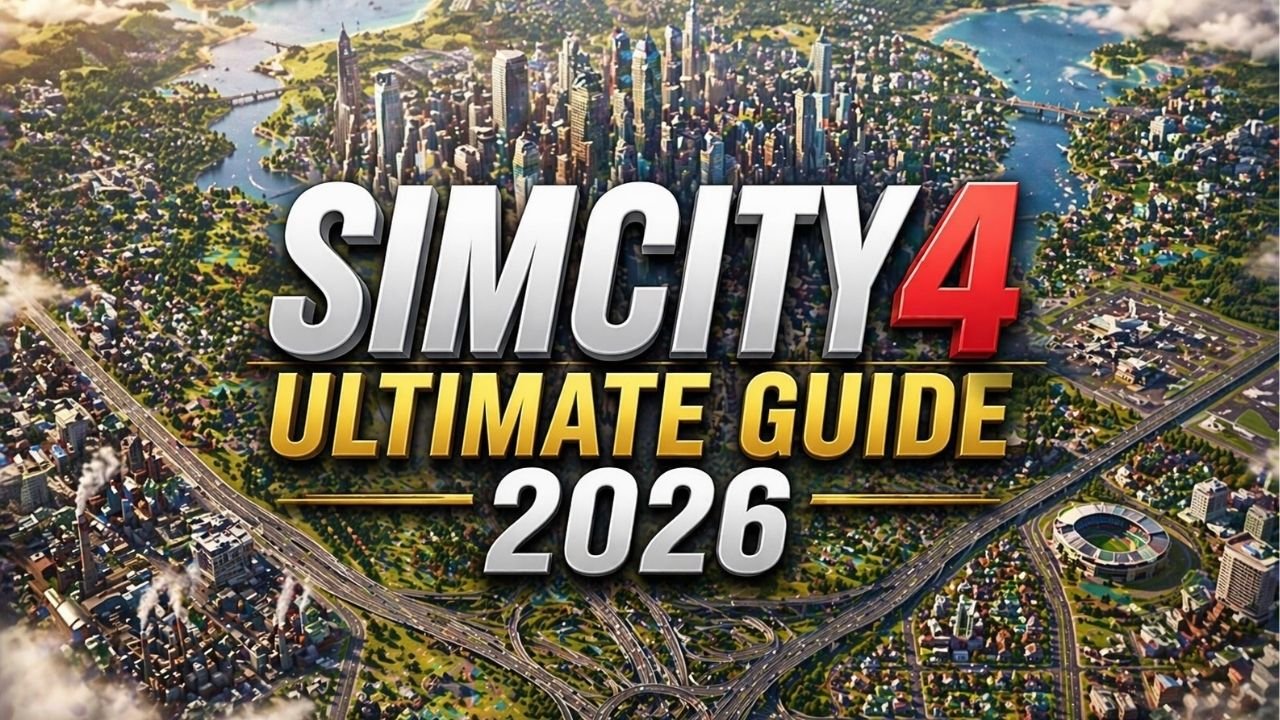
You sit down to play SimCity 4 for the first time. You zone a few residential areas, build a power station, and wait for your city to grow. Twenty minutes later you are completely broke, your citizens are leaving, and your carefully planned downtown looks like a parking lot that caught fire.
Then you restart. And this time — everything clicks.
That is the magic of SimCity 4. Furthermore, it is the kind of game that punishes impatience and rewards curiosity. Moreover, it has been doing exactly that since 2003, and in 2026 it still stands as one of the greatest city building games ever made. Whether you played it as a kid or you are discovering it for the first time, this complete SimCity 4 guide covers everything you need to know.
What is SimCity 4
SimCity 4 is a city building simulation game developed by Maxis and published by Electronic Arts in 2003. Furthermore, it is part of the legendary SimCity series that has defined the city building genre since 1989. Moreover, SimCity 4 is widely considered the last truly great entry in the entire SimCity franchise.
The concept is beautifully simple. You build a city from scratch — no time limits, no story objectives, no forced goals. Furthermore, you zone residential, commercial, and industrial areas. Moreover, you build roads, bridges, schools, hospitals, and power stations. In addition, people move into your city and start paying taxes. Then you use that money to build even more.
However, the real depth of SimCity 4 goes far beyond simple city building. Furthermore, individual cities connect to neighboring regions, allowing you to create massive interconnected metropolitan areas. Moreover, citizens can commute between regions for work, and you can export power and water to neighboring towns for extra income. Therefore, SimCity 4 is not just a city builder — it is a regional management masterpiece.
SimCity 4 Gameplay — How It Actually Works
Zoning and Development
The foundation of SimCity 4 is zoning. Furthermore, you designate areas as residential, commercial, or industrial and the game fills them in automatically as your population grows. Moreover, each zone type comes in low, medium, and high density options that you can adjust without destroying existing buildings.
This flexibility makes SimCity 4 one of the most accessible city builders ever made. Furthermore, you do not need to worry about complex production chains or technology unlocks. Moreover, you simply build what you want, where you want, with space and money as your only real limitations. In addition, starting funds in SimCity 4 are generous enough that most players can cover a large portion of the map right from the beginning.
Managing City Services
Every service building in SimCity 4 — from police stations to hospitals — has individual funding controls. Furthermore, this means you can build expensive facilities early and then scale their operating costs back to what your budget can actually support. Moreover, as your city grows and your tax income increases, you simply raise funding levels to meet growing demand.
This system makes budget management feel genuinely strategic rather than frustrating. Furthermore, a small underfunded clinic serves early residents perfectly well until the population demands a proper hospital. Moreover, a single elementary school satisfies basic education needs long before anyone needs a university. Therefore, always build for current needs rather than future ones — empty buildings drain budgets fast.
SimCity 4 City Building Strategy — Tips for Beginners
Start Small and Be Patient
The biggest mistake new SimCity 4 players make is expanding too fast. Furthermore, overbuilding before your tax base can support it creates budget deficits that spiral out of control quickly. Moreover, the most successful cities in SimCity 4 grow slowly, steadily, and deliberately.
Start with a small residential zone and basic services — power, water, a road network, and a small school. Furthermore, let your first residents settle and start paying taxes before adding anything new. Moreover, resist the temptation to build hospitals, universities, and subway networks before your population actually needs them. In addition, your first residents are typically low-income workers who need basic services — not luxury amenities.
Balance Your Tax Rates
Tax rates directly control what kind of residents and businesses move into your city. Furthermore, lowering taxes for a particular zone type attracts more of that demographic to your city. Moreover, adjusting rates strategically lets you shape the character of your city over time.
In addition, high-income residents pay significantly more taxes than low-income ones. Furthermore, attracting wealthy citizens requires clean streets, good schools, parks, and low crime rates. Therefore, invest in desirability improvements like parks, recreational facilities, and police stations as your city matures and your budget allows.
Build Your Transportation Network First
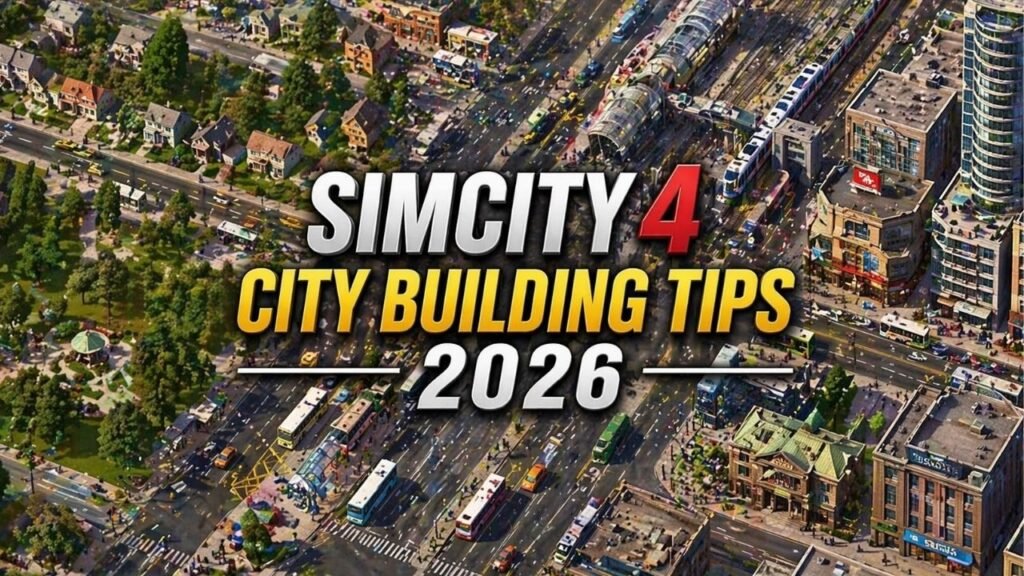
Transportation is the single most important element of any successful SimCity 4 city. Furthermore, a poorly planned road network creates traffic congestion that chokes your city’s growth and drives residents away. Moreover, the key mistake most players make is not thinking about transportation until the problem is already serious.
Plan your road grid from the very beginning. Furthermore, use a tight, organized grid layout rather than organic street patterns — it creates more efficient traffic flow as your city grows. Moreover, add bus stops early to give citizens public transit options before private car usage overwhelms your roads. In addition, rail stations and subway lines become essential as population density increases in your city center. Therefore, always build your city around its transportation network — not the other way around.
SimCity 4 Regions — The Game’s Best Feature
The regional system is what truly separates SimCity 4 from every other city builder. Furthermore, individual cities do not exist in isolation — they connect to neighboring regions on a shared map. Moreover, this creates opportunities for specialization that make city management far more interesting and realistic.
One region can focus entirely on heavy industry while workers commute from cleaner residential regions nearby. Furthermore, a power-generating region can export electricity to neighboring towns for additional income. Moreover, a university town can serve students from multiple smaller surrounding cities. In addition, agricultural regions can supply food while urban centers provide commerce and finance.
The more interconnected your regions become, the faster each individual city develops. Furthermore, immigration rates increase when regional infrastructure supports larger populations. Moreover, demand for commercial and industrial services grows naturally as the overall regional population expands. Therefore, thinking at the regional level — rather than just the city level — is what separates good SimCity 4 players from great ones.
SimCity 4 Desirability — How to Attract Wealthy Citizens
As your SimCity 4 cities mature, residents start demanding higher quality services and amenities. Furthermore, low-income workers are satisfied with basic housing and simple services. However, middle and upper-class citizens demand parks, clean air, good schools, low crime, and attractive neighborhoods.
Building parks throughout your city significantly increases nearby property desirability. Furthermore, sports venues, plazas, tennis courts, and recreation areas attract higher-income residents who pay substantially more taxes. Moreover, controlling pollution — especially from heavy industry — is essential for keeping wealthy neighborhoods desirable. In addition, efficient police coverage keeps crime rates low, which is a top priority for affluent residents.
Tourism also becomes an important income source in developed cities. Furthermore, landmark buildings like the Statue of Liberty and CN Tower attract visitors and boost surrounding commercial demand. Moreover, hotels, marinas, and country clubs serve tourist populations while generating steady tax revenue. Therefore, transitioning from an industrial economy to a service and tourism-based one is the natural evolution of any successful SimCity 4 city.
SimCity 4 Rush Hour Expansion
The Rush Hour expansion pack significantly improves the base game. Furthermore, the original SimCity 4 had problematic traffic AI that created congestion even in modest-sized cities. Moreover, Rush Hour introduced enhanced transportation facilities, new vehicle types, new buildings, and vastly improved pathfinding algorithms.
In addition, the expansion adds new building styles and gameplay features that make the overall experience considerably richer. Furthermore, driving missions let you personally explore your city from street level — a genuinely unique and memorable feature. Therefore, if you are buying SimCity 4 in 2026, always get the Deluxe Edition which includes Rush Hour — the base game without it feels significantly incomplete.
SimCity 4 Mods — Why They Matter
The modding community is one of the main reasons SimCity 4 remains relevant and playable in 2026. Furthermore, the game supports external plugins that extend and improve virtually every aspect of the experience. Moreover, hundreds of mods created by dedicated fans over more than twenty years have transformed SimCity 4 into something far beyond its original design.
The most essential mod is the Network Addon Mod — known as NAM. Furthermore, NAM completely overhauls the game’s transportation AI with advanced pathfinding algorithms that make traffic management realistic and functional. Moreover, it adds diagonal streets, light rail options, and numerous road types that the base game lacks entirely.
Other popular mods include realistic water textures, custom building packs, industry multipliers, and gameplay balance adjustments. Furthermore, the Simtropolis community website hosts thousands of these mods and remains active today. Therefore, installing a handful of essential mods before starting your first serious city is strongly recommended for the best possible experience.
Is SimCity 4 Worth Playing in 2026
Absolutely yes. Furthermore, SimCity 4 remains one of the most addictive and comprehensive city builders ever created despite being over twenty years old. Moreover, no modern city builder has fully replicated the depth of its regional system or the satisfaction of its slow-burn city growth.
The game has limitations. Furthermore, it is built on a 2D grid engine that makes diagonal roads and organic layouts difficult. Moreover, buildings look visually dated at maximum zoom compared to modern games. In addition, the base game without mods has traffic AI problems that create frustrating congestion in larger cities.
However, these weaknesses are minor compared to the strengths. Furthermore, the data display tools show pollution maps, traffic routes, and citizen travel patterns in remarkable detail. Moreover, the combination of zone management, budget control, regional planning, and service optimization creates a depth that still feels fresh decades later. Therefore, SimCity 4 with the Rush Hour expansion and a few essential mods is still one of the finest gaming experiences available in 2026.
Final Thoughts
SimCity 4 is not just a game. Furthermore, it is a genuinely educational experience about how cities actually function — from infrastructure and taxation to pollution control and population management. Moreover, the satisfaction of watching a tiny village grow into a thriving metropolitan region of millions is something very few games have ever matched.
Start small. Be patient. Plan your roads early. Connect your regions. Furthermore, add mods before you start your first serious playthrough. Moreover, do not build what your city does not need yet. In addition, always listen to your data advisers — they tell you exactly what your citizens actually want.
Do all of that — and SimCity 4 will consume weeks of your life in the most satisfying way imaginable.
Save this pin and visit hopesgaming.com for more gaming guides and reviews!